Bedrock Priorities: Why AI Won't Fix Priority Whiplash
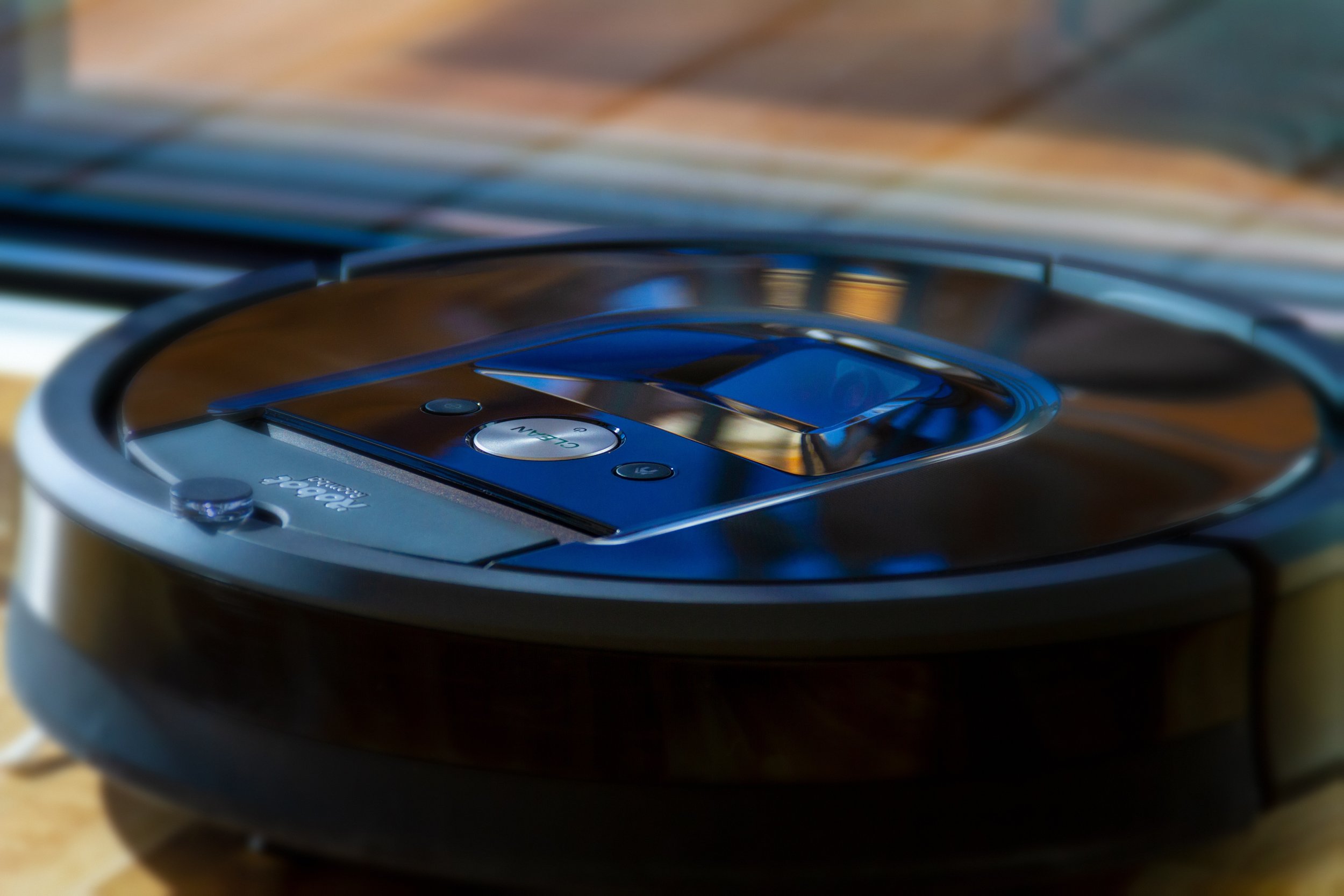
I recently bought a robot vacuum cleaner and mop.
On paper, it is pure Jetson-level luxury: an automated disc gliding across the room, whisking away dirt while I sit back with a cup of tea.
The reality? I have acquired a high-tech domestic toddler.
Before the robot can even start its "automated" cycle, I spend fifteen minutes picking up stray charging cables, moving chairs, and crawling under my child's bed to retrieve random Ooshies to make sure the floor is completely clear. Then we have to clean the brushes, empty the dustbin, and wash the mop pads (actually, my husband does this!). We haven't eliminated house chores; we’ve just taken on a second job as maintenance technicians for an appliance that was supposed to save us time.
If this sounds suspiciously like your current executive suite, you are not alone.
It is the exact same dynamic as Fred Flintstone’s car. From a distance, the vehicle looks like legitimate high-velocity transport. But pull back the stone frame, and you realize there is no engine under the bonnet. Fred is just sprinting barefoot on sharp gravel, sweating profusely to create basic momentum.
Right now, executive boardrooms across New Zealand are buying hyper-advanced AI tools expecting effortless efficiency. But just like my robot vacuum, if your operational environment is littered with clutter, conflicting demands, and a frame that lacks an actual engine, technology doesn't clean up the mess.
You’ve just bolted a turbocharger onto a stone car, forcing your people to sprint barefoot at light speed.
The Trap of Priority Whiplash
In Bedrock, whenever a new problem popped up, the solution was always simple: go out to the quarry, drag back a bigger, heavier dinosaur, and put it to work doing the exact same manual task. It felt like progress because everyone was moving fast, sweating, and surrounded by noise. But the underlying way things operated never actually changed.
Middle managers across New Zealand are already dealing with "priority whiplash", competing Monday-morning mandates from different executive silos, all marked "urgent." When you hand those teams AI tools without clearing the operational clutter, you don't create strategic agility.
You just get faster confusion.
Instead of delivering one well-considered proposal by Friday, your managers are now using AI to pump out three conflicting, high-gloss slide decks by Tuesday afternoon. You haven't streamlined decision-making; you've just equipped your people to sprint in opposite directions at 100 miles an hour under a heavy stone frame.
The Diagnostics of the High-Tech Assist
When leadership teams mandate AI adoption without clearing strategic clutter, they usually assume the bottleneck is execution speed.
If we apply Carol Bacchi’s WPR (What’s the Problem Represented to be?) framework to look beneath the bonnet of this approach, we reveal two critical misdiagnoses:
You assumed the problem was output volume, not strategic focus: If your managers are struggling, it’s rarely because they can't produce documents fast enough. It’s because leadership hasn't made the hard trade-offs about what not to do. AI allows teams to generate massive amounts of output for low-priority tasks, disguising a lack of focus as high performance.
You created a "second job" of digital housekeeping: Just like prepping the floor for my robot mop, your middle managers end up spending half their week prompting software, checking AI outputs for hallucinations, and wading through AI-generated noise just to figure out what actually matters.
The "Bedrock Priority Audit"
Before you ask your workforce to leverage AI for your strategic goals, put your executive team through three structural questions:
What are we assuming is broken? (Are our teams slow at executing, or are they constantly being pulled in three directions by shifting leadership priorities?)
What are we explicitly telling them to stop doing? (What legacy reports, meetings, or KPIs are we permanently removing to make room for AI integration?)
Is our strategic chassis aligned? (Have we agreed on the single non-negotiable objective before we give everyone a tool that multiplies their output?)
AI can multiply your speed, but it cannot choose your direction. If your strategic priorities are carved out of heavy, unyielding stone, adding futuristic tools will only accelerate the whiplash.
💬 What is one piece of technology in your workplace (or home!) that promised to save time, but actually ended up creating a second job? Drop your thoughts below, I’d love to hear how your leadership team handles cumulative load.
📌 Ready to Clear Your Strategic Clutter?
Stop letting priority whiplash drain your operational capacity.
Originally Published on Linkedin
Read Next in the Series